Japan E-Commerce Trends: How Online Shopping Is Changing

Exploring Japan's evolving online shopping trends.
8 min read • 1,641 words
Table of Contents
ToggleJapan E-Commerce Trends: How Online Shopping Is Changing
The landscape of Japan’s e-commerce market is evolving rapidly, with projections indicating it will reach a staggering $200 billion by 2025. This growth is not just a number; it reflects significant shifts in consumer behavior and technological advancements. Understanding these Japan E-Commerce Trends is crucial for businesses looking to thrive in this competitive environment. In this article, we will explore the key factors driving these changes, including the rise of mobile commerce, which now accounts for over 50% of all e-commerce sales in the country.
Moreover, social media platforms are becoming essential tools for product discovery among Japanese consumers, reshaping how brands engage with their audience. As same-day delivery services become a standard expectation, and sustainability concerns grow, businesses must adapt to meet these demands. Readers will gain insights into these trends and learn how to leverage them for success in the Japanese market.
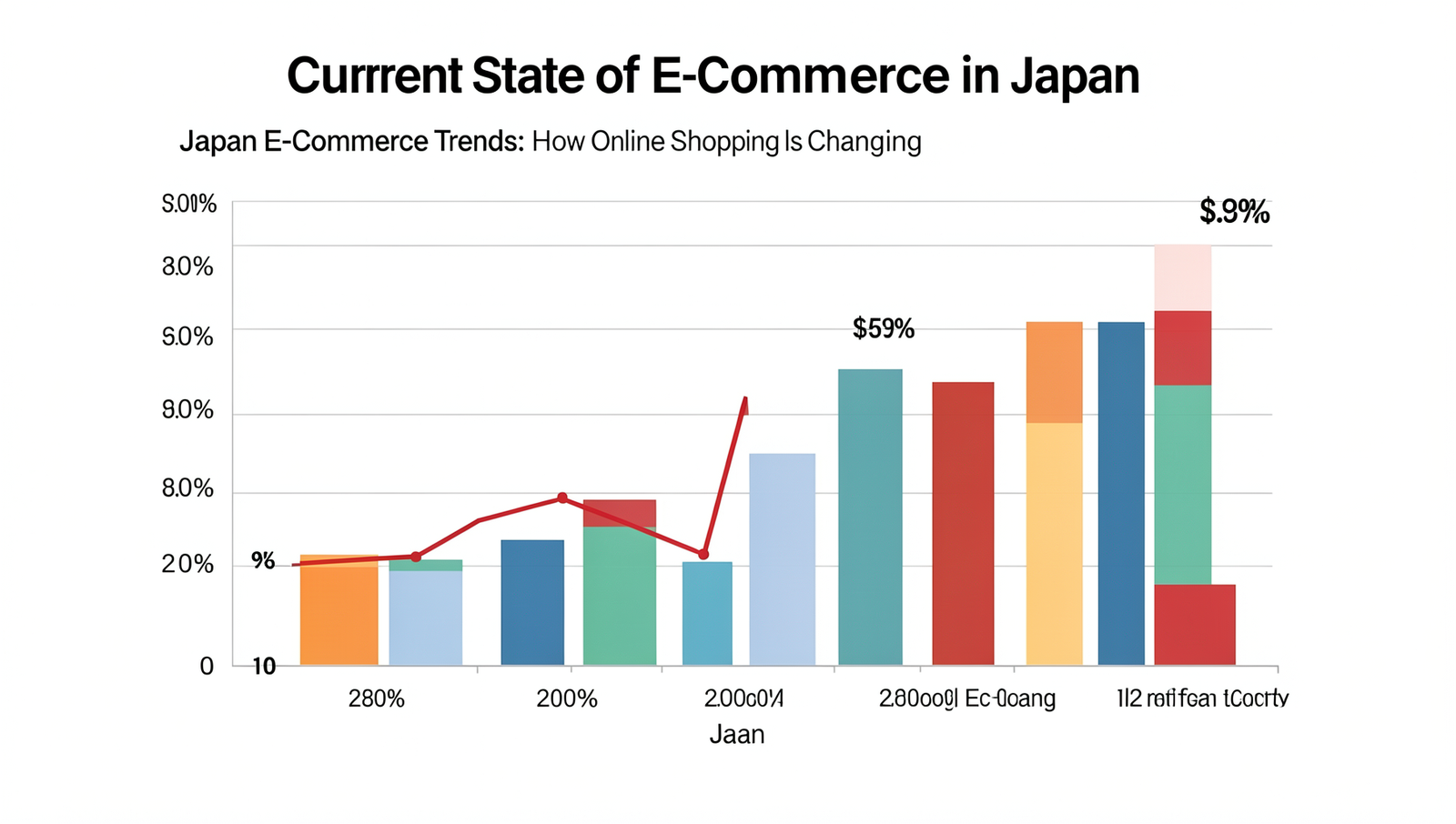
Current State of E-Commerce in Japan
Japan’s e-commerce market has experienced remarkable growth over the past few years, becoming one of the largest in the world. As of 2023, the market size is estimated to exceed ¥20 trillion, reflecting a compound annual growth rate (CAGR) of approximately 10%. This growth is driven by various factors, including increased internet penetration, the rise of mobile commerce, and changing consumer behaviors.
Several key players dominate the Japanese e-commerce landscape. Major companies such as Rakuten, Amazon Japan, and Yahoo! Shopping are at the forefront, each offering unique services and product ranges. Rakuten, for instance, is known for its loyalty program, which incentivizes repeat purchases, while Amazon Japan focuses on fast delivery and a vast selection of goods. These platforms have become integral to the shopping habits of Japanese consumers.
When it comes to popular product categories, electronics, fashion, and beauty products lead the way. Japanese consumers show a strong preference for high-quality goods, particularly in the fashion and beauty sectors. Local brands often outperform international ones due to their reputation for quality and craftsmanship. Additionally, the rise of eco-conscious shopping has led to an increase in demand for sustainable products.
The impact of mobile commerce on shopping habits cannot be overstated. With over 90% of the population owning smartphones, mobile shopping has become a prevalent trend. Consumers are increasingly using their devices to browse and purchase products, leading to the development of mobile-optimized websites and apps. This shift has prompted retailers to enhance their mobile offerings, ensuring a seamless shopping experience.
- Market size: Over ¥20 trillion
- Key players: Rakuten, Amazon Japan, Yahoo! Shopping
- Popular categories: Electronics, fashion, beauty
- Mobile commerce: Over 90% smartphone penetration

Technological Innovations Driving Change
In recent years, Japan has witnessed a significant transformation in its e-commerce landscape, largely driven by technological innovations. These advancements are reshaping how consumers shop online, enhancing their experiences and influencing purchasing decisions.
One of the most notable trends is the rise of artificial intelligence (AI) and machine learning. Retailers are increasingly utilizing these technologies to create personalized shopping experiences. For instance, AI algorithms analyze consumer behavior, preferences, and purchase history to recommend products tailored to individual users. This level of personalization not only improves customer satisfaction but also boosts conversion rates for online retailers.
Another exciting development is the integration of augmented reality (AR) and virtual reality (VR) in online retail. These technologies allow consumers to visualize products in their own space before making a purchase. For example, furniture retailers in Japan have adopted AR applications that enable customers to see how a piece of furniture would look in their home. This immersive experience helps reduce uncertainty and increases the likelihood of purchase.
Furthermore, big data plays a crucial role in understanding consumer behavior. By analyzing vast amounts of data collected from various sources, retailers can identify trends, preferences, and shopping patterns. This insight allows businesses to optimize their marketing strategies and inventory management, ensuring that they meet consumer demands effectively.
Lastly, the emergence of voice commerce and smart assistants is revolutionizing the way consumers interact with e-commerce platforms. With the increasing popularity of devices like Amazon Echo and Google Home, consumers can now make purchases using voice commands. This hands-free shopping experience is particularly appealing to busy individuals, making it a growing trend in Japan’s e-commerce sector.
- AI and machine learning for personalized experiences
- AR and VR for immersive product visualization
- Big data for consumer behavior analysis
- Voice commerce for convenient shopping
As these technological innovations continue to evolve, they will undoubtedly shape the future of Japan’s e-commerce trends, making online shopping more engaging and efficient for consumers.

Consumer Behavior and Preferences
Japan’s e-commerce landscape is rapidly evolving, driven by shifts in consumer demographics and their online shopping habits. Younger generations, particularly Millennials and Gen Z, are increasingly comfortable with digital platforms, leading to a significant rise in online shopping. This demographic shift is characterized by a preference for convenience, with many consumers opting for mobile shopping apps and websites that offer seamless user experiences. For instance, platforms like Rakuten and Amazon Japan have tailored their services to cater to these tech-savvy shoppers, providing personalized recommendations and easy navigation.
Social media has emerged as a powerful influence on purchasing decisions in Japan. Platforms such as Instagram and Twitter play a crucial role in shaping consumer preferences, with many brands leveraging influencers to promote their products. According to recent studies, a significant percentage of Japanese consumers report that they discover new products through social media channels. This trend highlights the importance of integrating social media marketing strategies into e-commerce plans, as brands aim to engage with their audience in a more interactive and authentic manner.
Another notable trend is the growing demand for sustainable and ethical products. Japanese consumers are becoming more environmentally conscious, leading to a rise in the popularity of eco-friendly brands. Many online retailers are now emphasizing their commitment to sustainability, offering products that are ethically sourced and produced. This shift is evident in the increasing number of online marketplaces dedicated to sustainable goods, catering to consumers who prioritize ethical consumption.
- Increased use of digital wallets and contactless payments.
- Growing emphasis on cybersecurity and data protection.
- Adoption of buy-now-pay-later services.
Trends in payment methods have also evolved, with consumers favoring digital wallets and contactless payment options for their convenience and security. As e-commerce continues to grow, ensuring robust cybersecurity measures will be essential for building consumer trust and encouraging online shopping.
Future Outlook and Challenges
As we look ahead to the next 5-10 years, Japan’s e-commerce landscape is poised for significant transformation. Predicted trends indicate a substantial increase in mobile commerce, driven by the widespread adoption of smartphones and mobile payment solutions. According to industry analysts, by 2030, mobile shopping could account for over 50% of all online sales in Japan. Additionally, the integration of augmented reality (AR) and virtual reality (VR) technologies is expected to enhance the online shopping experience, allowing consumers to visualize products in their own environments before making a purchase.
However, online retailers in Japan face several challenges that could hinder their growth. One major issue is the intense competition from global e-commerce giants like Amazon and Alibaba, which have established strong footholds in the market. These companies often offer lower prices and faster shipping options, making it difficult for local businesses to compete. Furthermore, logistical challenges, such as high shipping costs and complex return processes, can deter consumers from shopping online.
- Global Competition: The presence of international players can overshadow local businesses, forcing them to innovate continuously.
- Consumer Trust: Building trust in online transactions remains a hurdle, especially for smaller retailers.
- Technological Adaptation: Keeping up with rapidly evolving technologies requires significant investment.
To thrive in this changing market, local businesses must adopt strategic approaches. Emphasizing customer service and personalized shopping experiences can differentiate them from larger competitors. Additionally, leveraging social media platforms for marketing and engaging with consumers can foster brand loyalty. Collaborating with local influencers to promote products can also enhance visibility and trust among potential customers. By focusing on these strategies, Japanese retailers can navigate the challenges of the evolving e-commerce landscape and capitalize on emerging opportunities.
Conclusion
In summary, Japan E-Commerce Trends are reshaping the landscape of retail in the country, driven by technological advancements and changing consumer behaviors. The rise of mobile shopping, the integration of artificial intelligence, and the increasing popularity of social commerce are just a few of the factors contributing to this transformation. As more consumers turn to online platforms for their shopping needs, businesses must adapt to meet these evolving expectations. The convenience of online shopping, coupled with personalized experiences, is enhancing customer satisfaction and loyalty.
Looking ahead, companies should focus on leveraging data analytics to understand consumer preferences and optimize their offerings. Embracing innovative payment solutions and enhancing logistics will also be crucial in maintaining a competitive edge. By staying attuned to Japan E-Commerce Trends, businesses can not only survive but thrive in this dynamic market, ensuring they remain relevant in an increasingly digital world.
Frequently Asked Questions

What are the current trends in Japan’s e-commerce market?
Japan’s e-commerce market is witnessing significant growth, driven by mobile shopping, social commerce, and the rise of subscription services. Consumers increasingly prefer convenience, leading to a surge in demand for fast delivery options and personalized shopping experiences tailored to individual preferences.

How has consumer behavior changed in Japan’s online shopping?
Japanese consumers are becoming more tech-savvy, favoring online shopping for its convenience and variety. There is a noticeable shift towards mobile devices for purchases, and consumers are increasingly influenced by social media and online reviews when making buying decisions.
What role does technology play in Japan’s e-commerce
About the Author